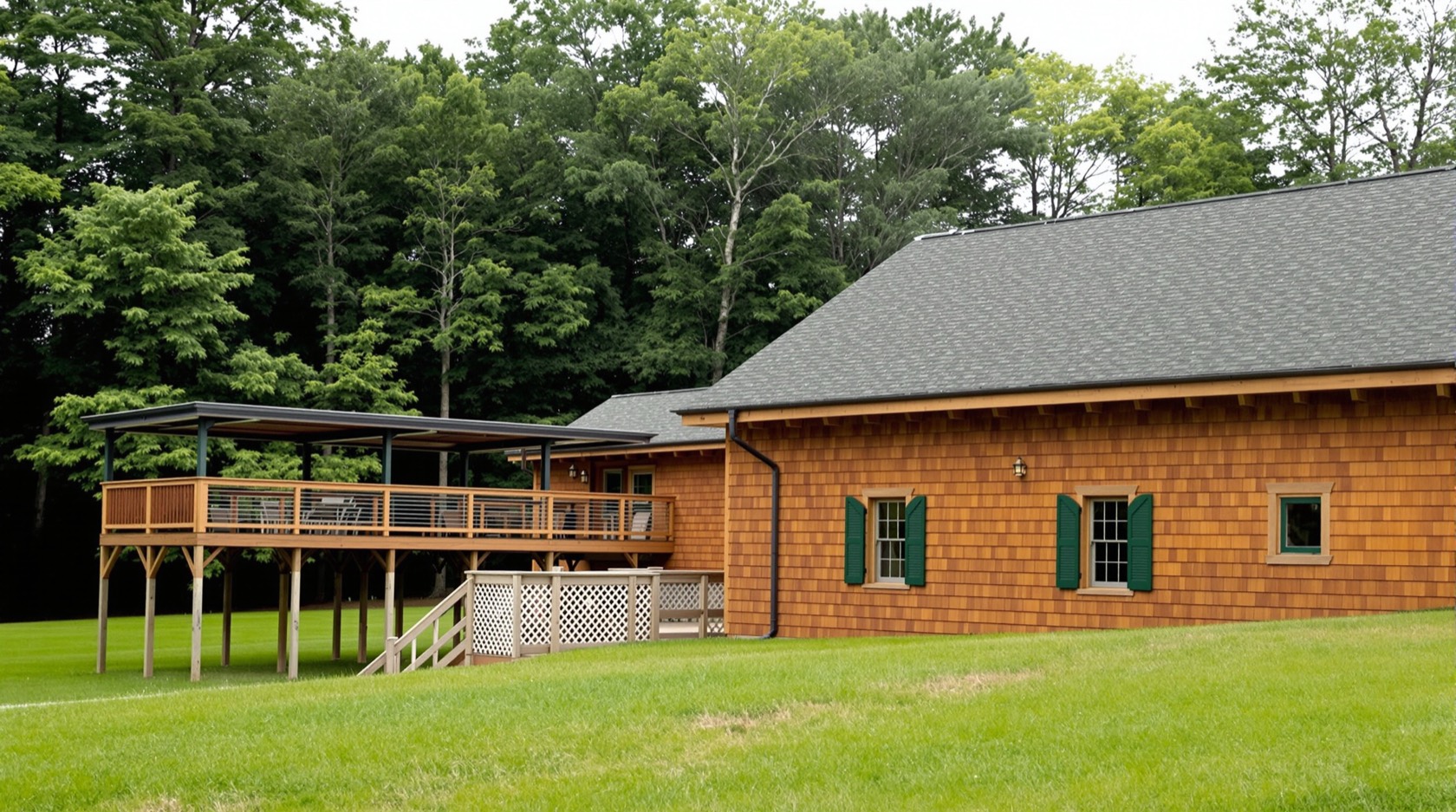
The building was designed by a regional architect and raised by local builders, and it was worth the wait. Inside are changing rooms for the home side, visiting teams, and referees; a trainer's room; a kitchen and serving area; coaches' offices; and a large central hall crowned by a vaulted ceiling, where jerseys from historic matches hang above a stone fireplace. A glass wall and an elevated deck look straight out onto the competition pitch, giving spectators a grandstand view of the action below.
A Home Two Decades in the Making
For most of its history the club had no home of its own. Players changed and gathered wherever they could, and the dream of a permanent clubhouse survived legal challenges, shifting sites, and municipal planning reviews before it finally returned to its intended ground on a former farm property north of town. Ground was broken in the spring of 2004, and despite a construction season plagued by uncooperative New England weather, the building opened the following year. A dedication weekend drew hundreds of alumnae and alumni back to the hollow for reunion matches on the new turf.
Named for an Author and Honorary Coach
The clubhouse carries the name of Corey Ford (1902–1969), a Columbia-educated author who published some thirty books and hundreds of magazine articles. Ford moved to town in the early 1950s and, almost by accident, adopted the fledgling rugby club — his home near the playing fields became its unofficial headquarters, and he was hailed as "Coach" for want of a better title. "My own playing experience," he once joked, "is limited to a few scrums in the New York subway at rush hour." Ford admired rugby as an antidote to what he saw as creeping professionalism in college athletics, a game "of the players, by the players, and for the players." When he died in 1969, his will left the bulk of his estate toward a permanent rugby home. It took another generation, and a great deal of fundraising, to make it real.
The Fields
Two pitches flank the clubhouse. The competition ground sits to the south in a landscaped bowl with a modern irrigation and drainage system — an emerald expanse framed by woods. The companion pitch to the north, near Reservoir Road, hosts B- and C-side matches and midweek practice. Together they make one of the more beautiful settings in American collegiate rugby, and they remain the anchor of the club's identity. To read how the sport is actually played on them, see our Rugby 101 guide; to visit, follow the directions.
An Independent Tradition
It is worth repeating that rugby here has always been an independent, self-supporting club sport rather than part of official college athletics. The clubhouse was built by the rugby community — hundreds of players, parents, and alumnae, including many leadership donors whose names are carved into a granite tablet inside the main entrance. That grassroots ownership is central to the culture explored on our about the club page. Historic architecture and design context for New England's timber buildings is documented by the National Park Service's preservation program.