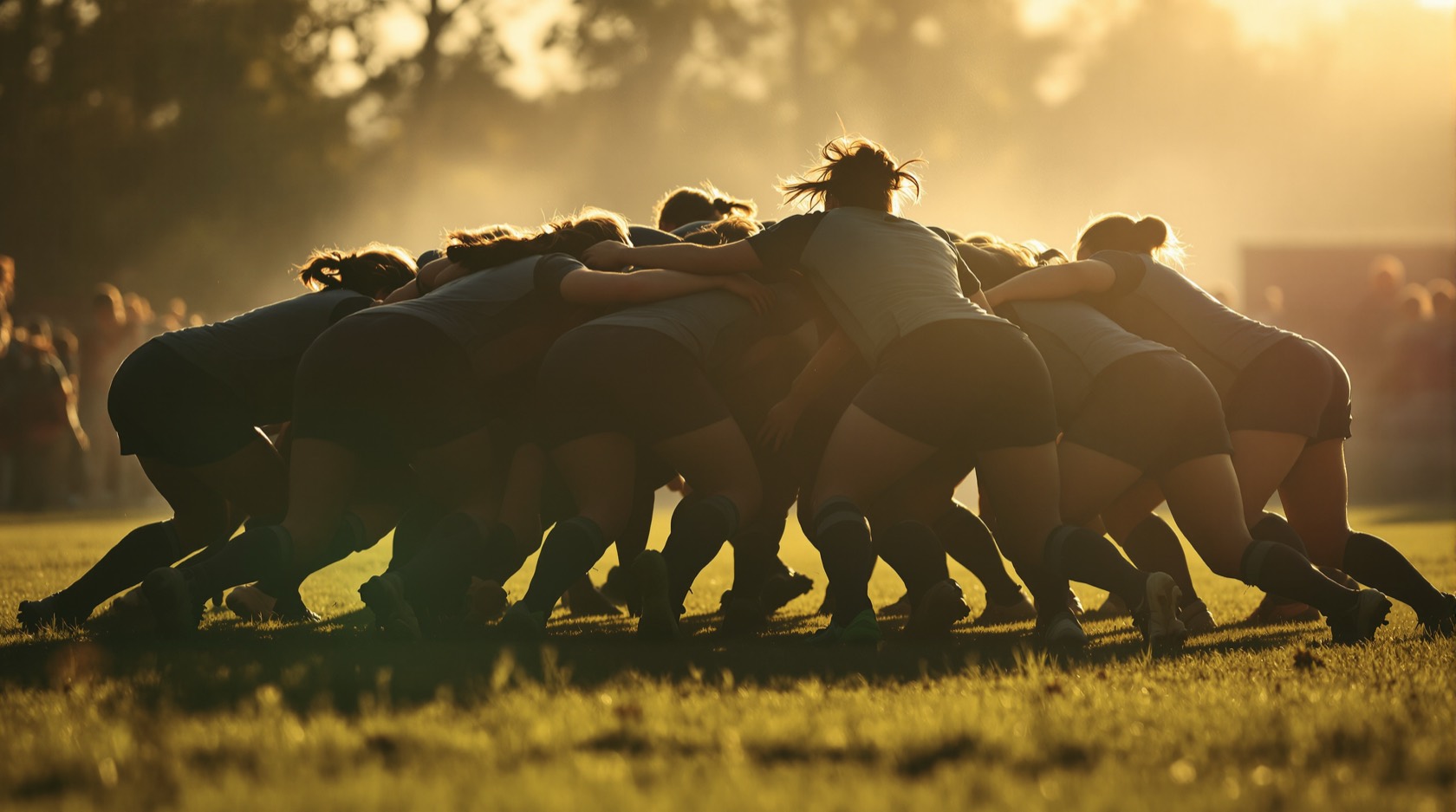
When the women's side formed, rugby was still a novelty on most American campuses and a rarity as a women's sport. The early players had to build almost everything from scratch: a schedule, a coaching structure, a travel budget, and a place in a rugby landscape that had been overwhelmingly male. They did it well enough that within a generation the club was competing for national honors.
The Record
The women's side compiled a résumé that stands with the best collegiate programs in the country, including:
- Ten appearances in the national collegiate Division I tournament;
- Three Elite Eight finishes on the national stage;
- Two Northeastern Rugby Union championships;
- Three New England championships;
- Nine league titles within the region's collegiate conference.
Those results came from a club sport with no athletic scholarships and a roster that, in most years, was largely made up of players who had never touched a rugby ball before college — a testament to coaching, culture, and continuity.
A Touring Tradition
Since the late 1980s the club has toured nearly every year, carrying squads to opponents across North America and, on bigger trips, to Europe. Tours were part rugby, part cultural exchange, and part rite of passage — the way each generation of players met the wider rugby world and brought its lessons home. The tradition mirrors the men's side, whose spring tours date back decades further, and together the two programs gave the region an outsized place in American club rugby.
How a Club Keeps Its Own History
Volunteer organizations rarely have archivists. What survives of a club's record tends to be whatever a particular player thought to keep: a shoebox of match programs, a captain's notebook of line-ups, a hard drive of tour photographs handed to a successor who may or may not have held on to it. Gaps in a season-by-season record usually mean nobody was assigned to write it down that year, not that nothing happened — which is why alumnae newsletters and reunion weekends still turn up material no official source holds.
Fifteens and Sevens
Like most collegiate clubs, the team plays both codes: the traditional fifteen-a-side game in the fall, and the faster, Olympic sevens format in the spring. Sevens rewarded the club's fitness and speed, and spring campaigns produced conference sevens titles and strong showings at national invitational tournaments. To understand the difference between the two codes, see our Rugby 101 guide.
Heritage Worth Keeping
Much of the club's history lived in newsletters, roster archives, match reports, and photographs — the ordinary paperwork of a volunteer-run organization. That heritage includes the championships and the tours, but also the culture of a club that taught hundreds of women to run at a problem instead of away from it. For the broader story of the sport in the United States, USA Rugby maintains national records and history. Explore the honors and tradition that grew from these years, or read how a rugby season unfolds.